According to Nolo, for twenty-two years, a New York home seller who suspected an old oil tank might be sitting under the lawn could choose to give the buyer a $500 credit at closing instead of completing the disclosure form. According to P&L Lawyers, that option disappeared for one-to-four family home sales on March 20, 2024. In most of New York, this is a paperwork change. In Brighton's oldest tracts, it lands somewhere more specific: on streets built during the exact decade underground heating oil tanks were the default equipment, and in a neighborhood where many of those tanks were never removed, only converted around.
The disclosure option Brighton sellers had
New York's Property Condition Disclosure Act has required sellers of residential real property to complete a detailed disclosure form since March 2002. From the start, the law gave sellers an alternative: instead of answering the form's questions about structural, mechanical, and environmental conditions, a seller could hand the buyer a $500 credit at closing and avoid completing the form. According to the New York State Bar Association, attorneys representing sellers routinely advised exactly that, reasoning that outside the disclosure act, New York remains a caveat emptor state where a seller generally owes no duty to volunteer problems unless there is active concealment or an affirmative misstatement. Legal guides describe the credit as the default choice for the large majority of New York sellers for two decades running.
Governor Hochul signed an amendment in September 2023 that eliminated that credit option starting March 20, 2024. According to Andelsman Law, the form was expanded in the same amendment to add new flood-history and mold questions. The form is organized into sections covering general property information, environmental conditions, structural conditions, mechanical systems, and miscellaneous items. The law still has exemptions, but a standard resale of a single-family home in Brighton is squarely inside it.
Why Houston Barnard and Meadowbrook sit in the exposure zone
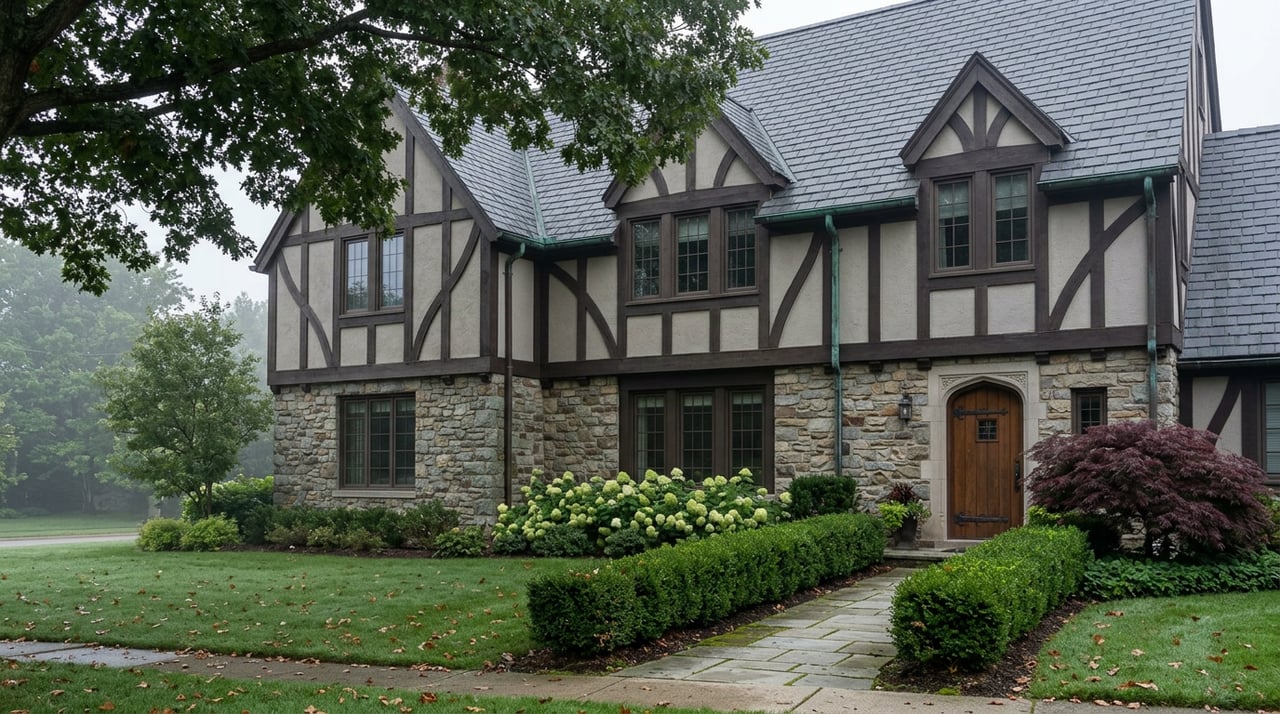
Brighton's two best-known early tracts were both built in the exact window when oil heat was the region's default. Houston Barnard, a Rochester developer, began laying out curved streets, curbs, and street lamps in his Houston Barnard Subdivision in 1918, encompassing Grosvenor Road, Pelham Road, and Council Rock Avenue between Highland Avenue and East Avenue. His second parcel, the Houston Barnard Tract, extended from Clover Street to Elmwood and East Avenues and includes Ambassador Drive, Sandringham Road, Elm Lane, Georgian Court Road, Trevor Court Road, and Esplanade Drive. A few years later and a short distance west, the Kodak Employees Realty Corporation bought the 98-acre Buckland farm in October 1926 to build Meadowbrook, with construction starting on Avalon Drive in 1928. Brighton's own town history page confirms the Houston Barnard tract was among several completed or under construction by the 1920s as the town shifted from farmland to a Rochester suburb.
A local HVAC contractor's description of its Brighton service area draws a line that matters more to a seller than to a historian. Older housing stock, especially 1920s and 1930s homes around East Avenue, Monroe Avenue, and the Houston Barnard tract, still commonly runs on older boilers or fuel oil furnaces, to the point that the contractor advertises servicing fuel oil equipment specifically because most other Rochester HVAC companies have stopped. Newer builds nearer Twelve Corners, Allen's Creek, Meadowbrook, and Buckland Park, by the same contractor's account, typically run on natural gas today.
That distinction is the detail worth sitting with. Meadowbrook was built in the same oil-heat era as Houston Barnard, just a few years later, yet a present-day Meadowbrook home is more likely to be described as a gas house. That gap did not happen because Meadowbrook was built differently. It happened because Meadowbrook homes have had a century to convert, and conversion does not automatically mean removal.
| Tract | Built | Common heat source today |
|---|---|---|
| Houston Barnard Tract and Subdivision | 1918 through the 1930s | Often still oil-fired |
| Meadowbrook | 1926 through the late 1920s | Largely converted to gas |
| Twelve Corners, Allen's Creek, Buckland Park corridor | Later construction | Natural gas from the start |
A furnace that's gone doesn't mean a tank that's gone
New York State's Department of Environmental Conservation lays out two legitimate ways to retire an underground heating oil tank. One is removal, which lets a soil test confirm whether the tank ever leaked. The other is closure in place, where the tank is emptied, cleaned, purged of vapors, and filled with an inert material like sand while the vent line stays open and intact. Both are lawful. Only one of them produces a tank a future seller can point to and say it is gone.
A closed-in-place tank is still there. It still shows up on a ground-penetrating radar sweep, and it still sits in the ground during every sale that follows, including a sale by someone who bought the house years after the conversion and never touched the mechanical system themselves. DEC's own homeowner guidance is candid about the tradeoff: leaving a tank in the ground avoids the cost of digging it out today, but a bank or a buyer will likely ask for an environmental assessment or removal before closing anyway, which can end up costing more than removing it the first time around.
A Meadowbrook seller whose home has run on gas for thirty years may not think of themselves as someone with a tank question at all.
What actually shows up on the sweep, and what it costs
A tank sweep uses ground-penetrating radar to scan a yard, driveway, and the areas around a foundation for the shape of a buried tank. Market rate for that scan in the Rochester area has generally run in the low hundreds of dollars as of early 2026. If a tank turns up, full removal in the upstate New York market, including Rochester, has typically landed in the range of $1,500 to $3,000, notably lower than removal costs downstate because of lower labor rates and less regulatory complexity. None of that includes remediation if soil testing turns up contamination, which is a separate and open-ended cost.
What changed is the incentive to skip it. Before March 2024, a seller who suspected a legacy tank could choose the $500 credit instead of completing the disclosure form.
Before you list a Houston Barnard or Meadowbrook home
- Ask whether any prior owner converted the heating system from oil to gas, and if so, whether the tank was removed or closed in place
- Request a tank sweep before listing if there is any uncertainty, rather than letting a buyer's inspector find it first
- If a tank is found, decide between removal and documented closure in place, and keep the paperwork either way
- Complete the disclosure form carefully
A few questions this raises
What if I already had a tank removed years ago? Keep or track down the paperwork from that removal. A completed closure record answers the question cleanly and is far simpler to produce before a buyer's attorney asks for it under contract.
Can I still just pay the $500 credit instead of filling out the form? Not anymore for a standard one-to-four family sale. The March 2024 amendment removed that option for qualifying transactions, though exemptions remain.
Brighton's oldest tracts carry a hundred years of Rochester's history in their street lamps and rooflines, and that same history is exactly what a 2026 closing now has to account for on paper. If you are weighing a sale in Houston Barnard, Meadowbrook, or anywhere else in Brighton and want a clear read on what your specific property might face at the disclosure stage, Lalla Fitzpatrick can walk through it with you. Let's Connect.
This article is general information, not legal, tax or financial advice. Consult a qualified professional about your situation.